Young journalists urged to build portfolios, seek newsroom experience before graduation
By Suleiman Sadiya Abdullahi
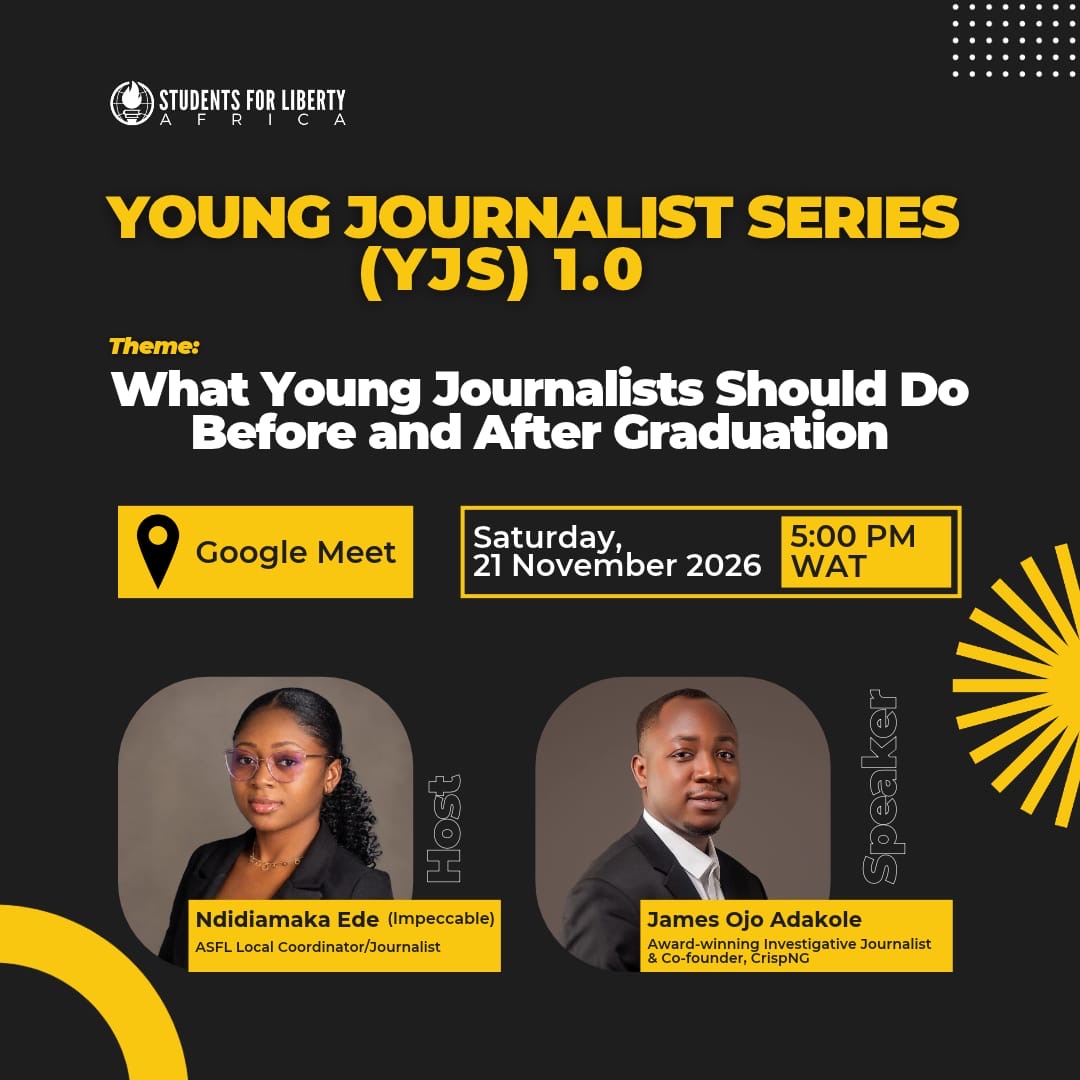
FEATURE IMAGE CAPTION: Young Journalist Series ( YJS 1.0)
An investigative journalist and fact-checker, James Ojo Adakole, has urged journalism students to start building their portfolios and professional reputations while still in school, saying the work they do on campus could open doors to opportunities in the media industry.
He gave this advice as a guest speaker at the first edition of the Young Journalist Series (YJS 1.0), held online on November 21. The theme was “What Young Journalists Should Do Before and After Graduation”. The event aimed to give young journalists practical knowledge and address some of the challenges they face as campus journalists and writers across Africa.
The event was organised by Ndidiamaka Ede (Impeccable), a journalist and Local Coordinator of Students for Liberty Africa, under the ASFL platform, an international organisation that champions liberty and press freedom.
Drawing from his experience as a campus reporter, Adakole encouraged students to make good use of the opportunities around them to improve their reporting skills and build their names in journalism.
“Make the campus your campus,” he told participants. He also asked them to think about what they would have to show for their time in school if they graduated the next day. “If you are to graduate tomorrow, what do you have to show?” he asked.
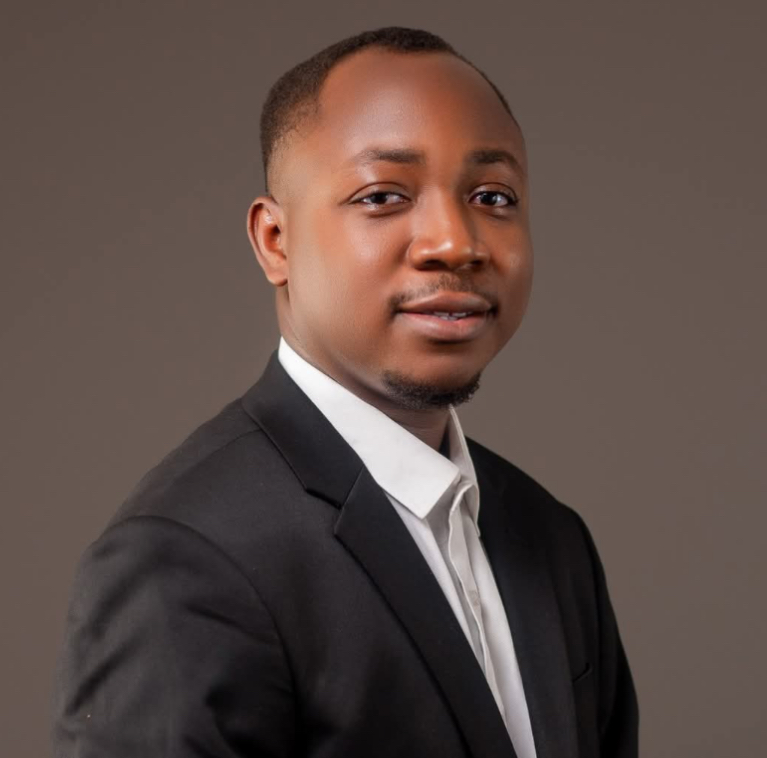
Photo Caption l: Mr Adakole
“Show your work”
Adakole encouraged students to build strong portfolios by writing credible stories and keeping records of their work.
He said they should look beyond straight news and explore stories about students’ welfare, how universities are run and held accountable, the condition of school environments and the activities of students’ union governments (SUGs). He acknowledged that some stories might be difficult to pursue but advised students to find mentors who could guide them.
He explained that a portfolio helps editors and potential employers see what a journalist can do and the experience they have gained.
He also urged young journalists to build a reputation for accuracy, fairness and consistency. He encouraged them to share their work on social media so that editors and other professionals could see what they had done.
Adakole said campus journalists should take advantage of internships, fellowships, mentorship programmes, essay competitions and other opportunities before graduation. These experiences, he explained, could help them meet people in the industry, learn new skills and gain practical experience.
Life after graduation
On life after graduation, Adakole, who has won several media awards, advised young journalists to follow the work of media organisations, learn from experienced journalists and editors, and reach out to professionals in the industry. He encouraged students to apply for internships before completing the National Youth Service Corps (NYSC) programme instead of waiting until afterwards.
He also advised them not to make money their only consideration when accepting internships or volunteer opportunities, noting that the experience, professional relationships, training and exposure could be useful for building careers.
For those who get opportunities to work in newsrooms, he said it was important to observe how things were done, understand editorial processes and learn to meet deadlines. He also encouraged them to accept corrections, learn from editors and keep improving their work.
He further reminded campus journalists to verify information before publishing, give people mentioned in their stories the opportunity to respond and report issues that affect students. He cautioned them to be mindful of the risks involved in campus reporting, noting that some students had faced disciplinary action over their reports.
He also advised them to balance academics with journalism practice and develop independent writing skills rather than depend heavily on artificial intelligence.
Some participants also shared what they learnt from the session and how the discussion had challenged their thinking about journalism.
Speaking on her takeaways, Iribagiza Teta Meghan, a third-year Public Relations student at Institut Catholique de Kabgayi, Rwanda, said the session taught her the importance of truthful storytelling, asking relevant questions and listening before writing.
She said she would improve her writing, verify information before publication and become more confident in approaching people for interviews.
Similarly, Ulumma Ikeji, a 400-level Mass Communication student at the University of Nigeria, Nsukka, said the workshop renewed her interest in writing after she had become discouraged by a lack of guidance and feedback.
She identified covering events, publishing more stories, building a portfolio and establishing professional relationships as steps she intends to take after the session.
Series to offer practical guidance
The event attracted more than 80 young journalists from different institutions across Nigeria and other African countries, including Uganda.
Speaking about the inspiration behind the initiative, Ede said her experience as a young journalist led to her decision to establish the series. She identified turning story ideas into well-developed stories was one of the challenges she encountered before receiving mentorship and gaining exposure through the Centre for Journalism Innovation and Development (CJID) Campus Reporter programme, which helped improve her skills.
She added that, during her time as president of the University of Nigeria, Nsukka’s Union of Campus Journalists (UCJ-UNN), between 2023 and 2024, she observed that many campus journalists she led lacked a clear understanding of journalism.

Photo caption: Miss Ede
She said the experience informed her decision to create more opportunities for young journalists to learn, develop their skills and navigate the profession.
Ede explained that bringing together participants from different African countries was driven by her desire to see young journalists grow and succeed in their careers.
On plans for subsequent editions, she said the organisers would continue engaging with campus journalists to understand their challenges and use their feedback to shape future sessions.
She disclosed that upcoming editions would adopt a more practical approach, focusing on specific challenges young journalists face, including the use of artificial intelligence in journalism, finding a reporting niche and identifying stories.
She added that the frequency of the series would depend on the level of interest shown by young journalists.
Ede also expressed interest in connecting participants with experienced media practitioners who could provide mentorship, teaching and networking opportunities.
Encouraging young journalists to remain determined despite the challenges of the profession, she said: “There must be difficulties in this life, but if we are intentional about it, we can make a way around it.”
She added that future sessions would narrow down the lessons from the speakers to address particular challenges facing young journalists.


Comments
Post a Comment